 STITCH ROUND
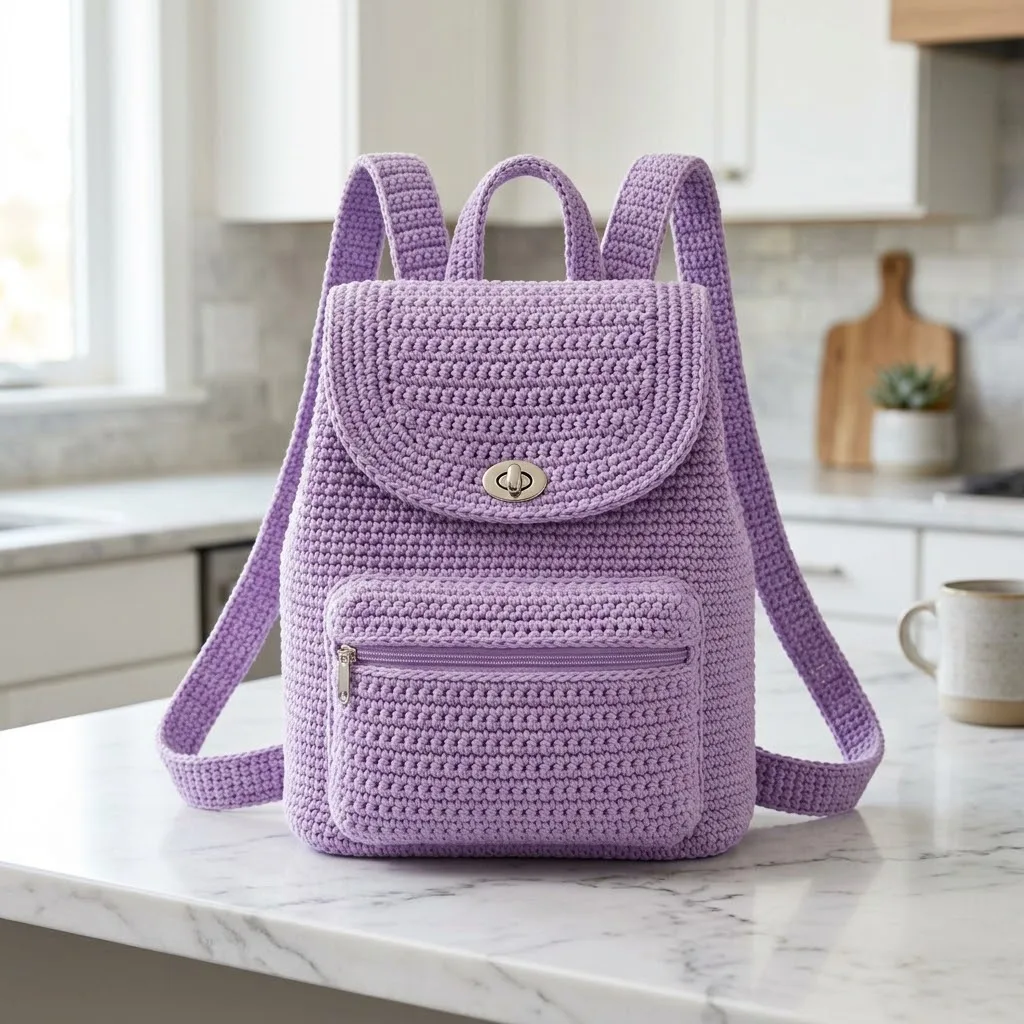
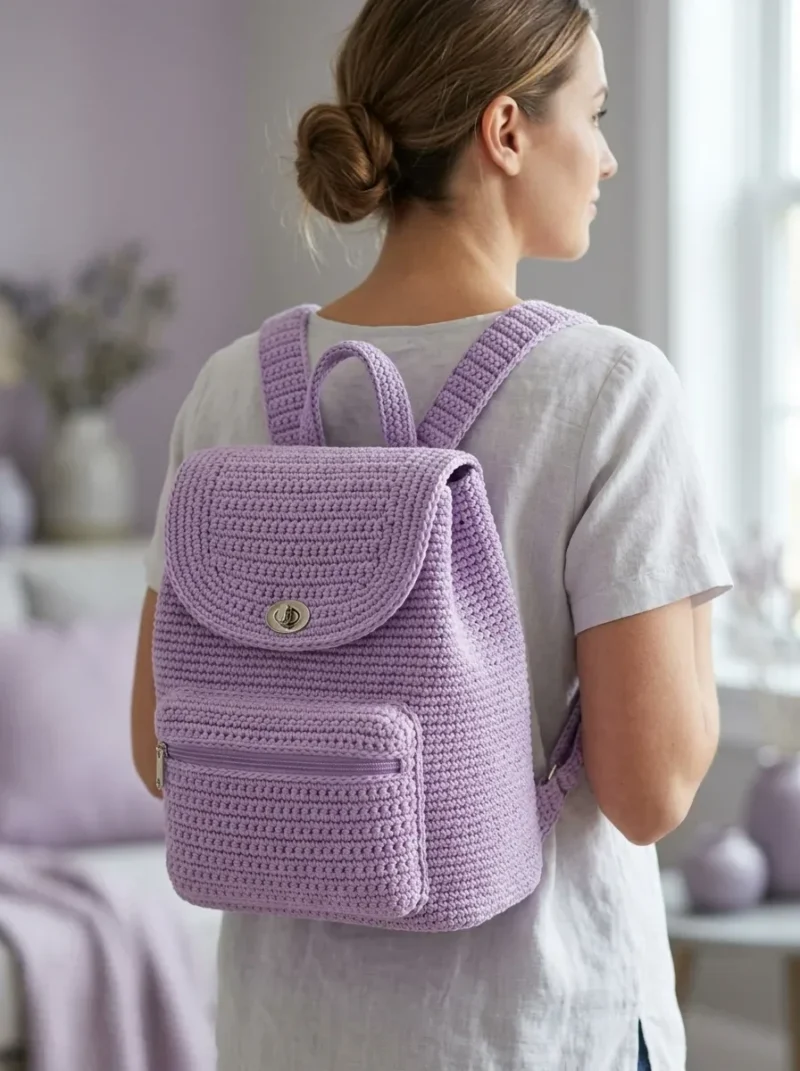
 Soft lavender crochet backpack pattern with built-in handle
Work 90 rows for the main panel, then two more pieces, to build this lavender crochet backpack.
- Skill
- Intermediate
- Rounds
- 18 rounds
- Yarn weight
- Worsted
- Hook
- 4.5 mm
- Time
- 4-6 hours
Intermediate
What the original page called it. Nothing here is graded a second time.

18 rounds
Each one gets its own line, with a box beside it to tick as you go.
Worsted
What the sample was made in. Any weight works — the size moves with it.
About this pattern
This backpack starts as a stack of flat rectangles worked in single crochet, with the main body panel taking 90 rows to complete before the two smaller panels follow at 50 and 30 rows each. Every row is a straight count across, so progress is easy to measure and the piece is simple to pick up and put down between sessions.
There is no increasing or decreasing here, just long rows of single crochet held to a steady gauge, so the real shaping work happens at the edges where panels meet for seaming. Slow down at the transition between the handle rows and the body rows on the main panel, since that is where the piece shifts from a narrow strap to a full-width rectangle.
- Work the long main panel first, since its opening rows form the handle before the piece widens into the body.
- Complete the two smaller rectangular panels separately, keeping the same tension so all pieces match for seaming.
- Fasten off and weave in ends on each panel before any assembly begins.
- Lay the panels flat to check their edges line up before sewing them into the bag shape.
- Sew the panels together with a tapestry needle, positioning the handle so it sits centered on the finished piece.
- Install the zipper and hardware with a sewing needle and matching thread to finish the closure.
What goes wrong
- Skipping the gauge check A loose gauge makes the bag stretch and sag under weight. Swatch first and go down a hook size if the fabric feels loose.
- Using a yarn without structure Soft or stretchy yarns won't hold the bag's shape. Stick with cotton or a cotton blend for durability.
- Losing count on the main panel Ninety rows is easy to miscount. Place a stitch marker at the start of every tenth row to stay on track.
- Mismatched panel edges before seaming Uneven panel widths throw off the final shape. Lay all pieces flat side by side and check they line up before sewing.
Yarn, hook and the rest
Copied from the source pattern's own materials list.
- Approximately 600 to 700 yards of worsted weight yarn (weight category 4)
- 4.5mm (US 7/G) crochet hook
- Using a slightly smaller hook than typical for worsted weight creates the dense fabric needed for a bag
- Tapestry needle for weaving ends and seaming
- Sewing needle and matching thread for zipper and hardware installation
- Check your gauge before starting. A bag that is too loose will stretch and sag under weight. If your gauge is off, try going down a hook size.
Progress tracker
0 of the 18 rounds on this page are ticked.
The pattern, round by round
Kept in the order and the wording the source used. Tick a round as you finish it; the ticks stay on this device.
Foundation
Round 1
Sc in 2nd ch from hook and in each ch across. (54 sts)through 30: Ch 1, turn. Sc in each st across. (8 sts each row) This creates a handle approximately 1.75 inches wide and 6 inches long. Fasten off with a long tail.
Round 2
Ch 1, turn. Sc in each st across. (54 sts)Rows 3 through 90: Repeat Row 2. (54 sts each row) You should have a rectangle measuring approximately 12 inches wide by 18 inches tall. Fasten off and weave in ends.*Quick tip: Place a stitch marker at the beginning of every 10th row. This helps you keep count without constantly recounting from the beginning.*
Foundation
Round 1
Sc in 2nd ch from hook and in each ch across. (22 sts)
Round 2
Ch 1, turn. Sc in each st across. (22 sts)Rows 3 through 50: Repeat Row 2. (22 sts each row) This creates a rectangle approximately 5 inches wide by 10 inches long. Fasten off.
Foundation
Round 1
Sc in 2nd ch from hook and in each ch across. (40 sts)
Round 2
Ch 1, turn. Sc in each st across. (40 sts)Rows 3 through 30: Repeat Row 2. (40 sts each row) This piece measures approximately 9 inches wide by 6 inches tall. Fasten off.
Foundation
Round 1
Sc in 2nd ch from hook and in each ch across. (48 sts)
Round 2
through 20: Ch 1, turn. Sc in each st across. (48 sts) Now you will shape the curved bottom edge.
Round 21
Ch 1, turn. Sk first st, sc in next 46 sts, sk last st. (46 sts)
Round 22
Ch 1, turn. Sk first st, sc in next 44 sts, sk last st. (44 sts)
Round 23
Ch 1, turn. Sk first st, sc in next 42 sts, sk last st. (42 sts)
Round 24
Ch 1, turn. Sk first st, sc in next 40 sts, sk last st. (40 sts)
Round 25
Ch 1, turn. Sk first st, sc in next 38 sts, sk last st. (38 sts)
Round 26
Ch 1, turn. Sk first st, sc in next 36 sts, sk last st. (36 sts)
Round 27
Ch 1, turn. Sk first st, sc in next 34 sts, sk last st. (34 sts)
Round 28
Ch 1, turn. Sk first st, sc in next 32 sts, sk last st. (32 sts) Fasten off, leaving a long tail for seaming.
Foundation
Round 1
Sc in 2nd ch from hook and in each ch across. (8 sts)
Round 2
through 140: Ch 1, turn. Sc in each st across. (8 sts each row) This creates a strap approximately 1.75 inches wide and 28 inches long. Adjust length as desired for the wearer.Fasten off, leaving a very long tail for attaching to the bag.
Hook
4.5mm (US 7/G) crochet hook
Using a slightly smaller hook than typical for worsted weight creates the dense fabric needed for a bag
Notions
One twist lock purse closure (approximately 1.5 inches wide)
One 6-inch zipper in a matching color Tapestry needle for weaving ends and seaming Stitch markers Sewing needle and matching thread for zipper and hardware installation
Optional: fabric for lining the interior
Pocket Back Panel
Make a second piece identical to the front pocket piece. These two pieces will sandwich your zipper.
Check your count
- Foundation · Round 1: 54 sts
- Foundation · Round 2: 54 sts
- Foundation · Round 1: 22 sts
- Foundation · Round 2: 22 sts
- Foundation · Round 1: 40 sts
- Foundation · Round 2: 40 sts
Finish
- Weave in every tail from all three panels along the wrong side before any seaming begins.
- Seam the panels together with a tapestry needle, matching edges so the bag sits square and the handle lies flat.
- Install the zipper and any hardware with a sewing needle and matching thread for a secure, snag-free closure.
Bigger or smaller
- Smaller
- Work fewer rows on the main panel before fastening off to shorten the finished bag's height while keeping the same hook and yarn.
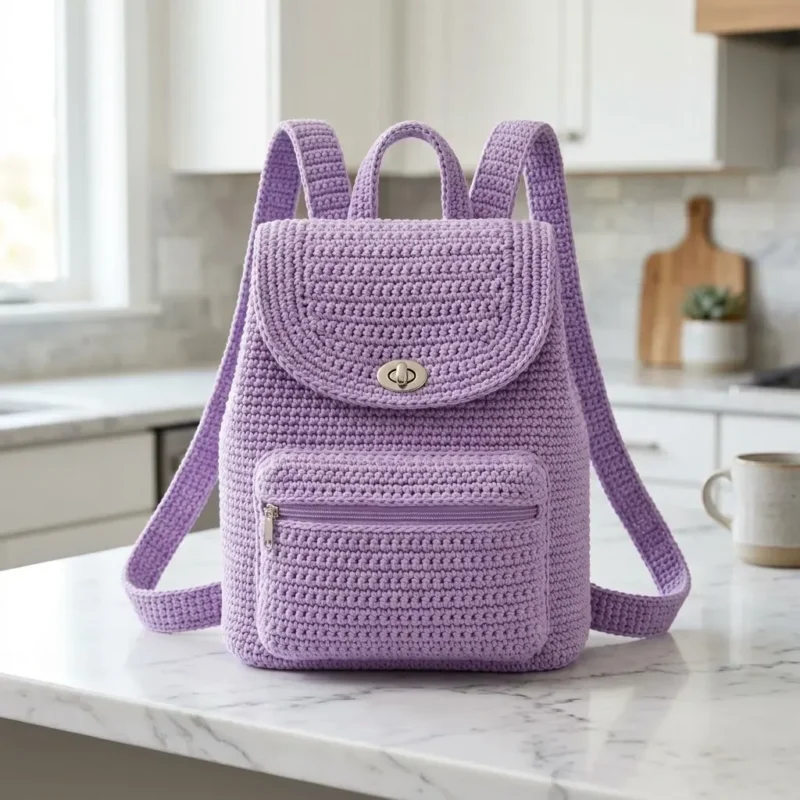
Photographs of this one
Every photograph on this page was taken by whoever published the pattern, and they are printed in the order the source listed them.
FAQs
Asked and answered
These answers came from whoever first published the pattern, kept word for word.
Why does the pattern call for a smaller hook than usual for worsted yarn?
A smaller hook tightens the fabric so it holds its shape instead of sagging. This dense fabric is what gives the backpack enough structure to carry weight.
Can a different fiber be used instead of cotton?
Cotton or a cotton blend is recommended because it supports the bag's structure and resists stretching. A different fiber may still work but could need an even smaller hook to keep the fabric firm.
How is the handle attached to the bag?
The handle is not sewn on separately. It is worked directly into the opening rows of the main panel before the piece widens into the full body.
What is the easiest way to keep track of progress on the long main panel?
Place a stitch marker at the start of every tenth row. This makes it simple to confirm the row count without recounting from the beginning each time.